
The 1960s are known to be one of the most influential decades in music history – here grew the Beatles, Bob Dylan, and the Beach Boys, to name a few. This emergence of rock began the takeover where jazz would start to be overshadowed. The works of Miles Davis and John Coltrane most notably headlined the wave of jazz that hit America in the late 50s and early 60s, but following the rise of more modern rock, Brazil began to play a major role in bringing jazz back.
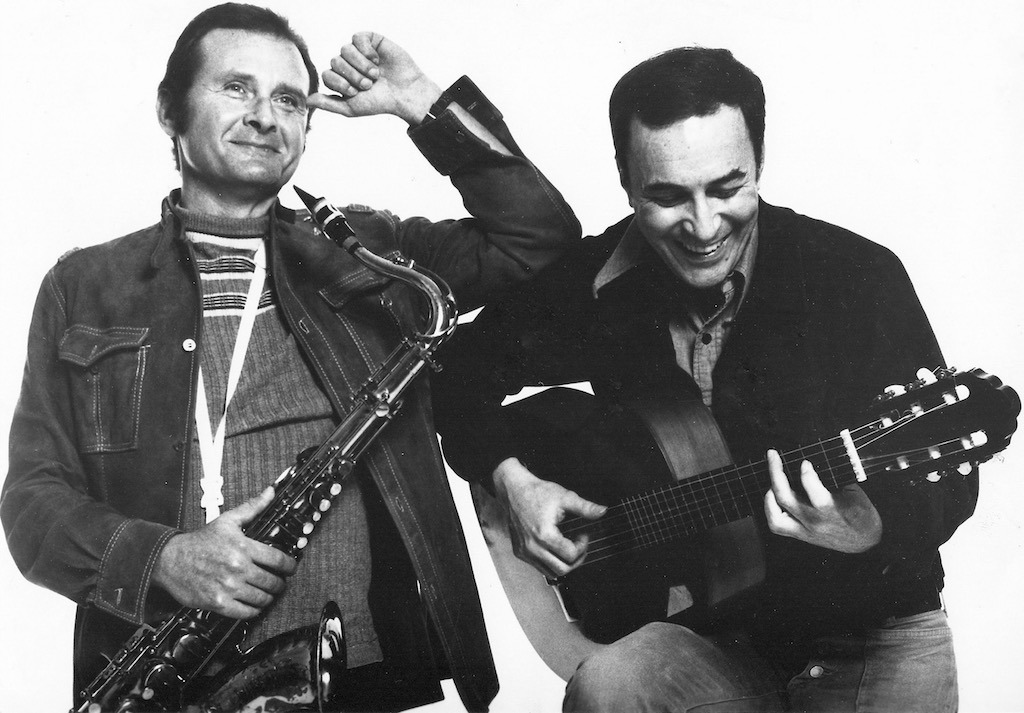
One of these works that helped jazz re-emerge is “Getz/Gilberto” by Stan Getz and Joāo Gilberto. Born from the American Getz and the Brazilian Gilberto, the album is celebrating its 62nd anniversary this coming week.
Bossa nova, a more relaxed form of samba music, had only just begun five years prior to the recording of the project. So while the genre holds a high level of prominence in the current fabric of Brazilian culture, it had only just started hitting the mainstream in Brazil by the time “Getz/Gilberto” started recording in April of 1963. However, the story of this project begins well before its recording.
With the popularity of jazz on a slide, a bassist named Don Payne took a trip in 1961 to Brazil, where he discovered the new genre of bossa nova. Impressed, he returned home with multiple vinyl records, one of which he gave to his neighbor who was a saxophonist. This is where Stan Getz discovered bossa nova.
It was a year later when bossa nova star Joāo Gilberto took his talents to the famed Carnegie Hall in New York City, where Getz was in attendance and eventually met the star following the show. This is where the duo began – eventually beginning the recording just a few months after his performance. From there, it was bossa nova magic.
“Getz/Gilberto” is a record that is truly timeless – it does not matter how simple the premise of the overall album really is, everything is executed in a way that is so perfect that it feels like it could be around for generations upon generations. For one, Stan Getz is an absolutely phenomenal saxophonist – there are moments throughout this album where he goes on runs of solo work that last minutes, but they don’t overstay their welcome.
The fourth track, “Desafinado”, is exactly proof of that. Getz goes on for two minutes of solo play absent from Gilberto’s vocals, and it has aged perfectly. He may not be doing anything revolutionary with the saxophone, but he furthers its sound just by being able to play it with more skill than those before him. The sounds of bossa nova feel like they were made for the duo, and it seems like they feel the same way, as later in the track Gilberto says, “Que isto e bossa nova, que isto e muito natural” (“this is bossa nova, this is very natural”).
The whole album is written as what is almost a love letter – Gilberto addresses the listener like he is singing to his wife or to a family member. In a way, it adds a sense of intimacy, a sense of conversation. In fact, his then-wife, Astrud Gilberto, is even featured throughout the project’s most iconic moments. Its most popular track, “Corcovado”, has her speak in English to the listener as she talks about the calm nights of Rio de Janeiro as she looks up Corcovado (the mountain that Christ the Redeemer sits upon). Her words are followed by the romanticization of Brazilian nights – the walks along the waters, the starry nights, and the feelings of falling in love.
Romance is a common theme throughout the project, with its other hit track, “The Girl From Ipanema,” being another track between Joao and Astrud. Here, he swoons over this character’s appearance, describing her as one of the most beautiful things he has ever seen. The way Gilberto writes feels so minimalist, yet so gorgeous at the same time. In a way, I think his simple words add more of an effect and have more emotion behind them.
Overall, “Getz/Gilberto” has been a beautiful beginning to anyone’s bossa nova journey, and it is most definitely a classic. It blended the well-known aspects of the American jazz sound with a developing Brazilian samba genre, helping add to the onset of the real bossa nova sound. Bossa nova is now a mainstay within music, and we have “Getz/Gilberto” to thank.