
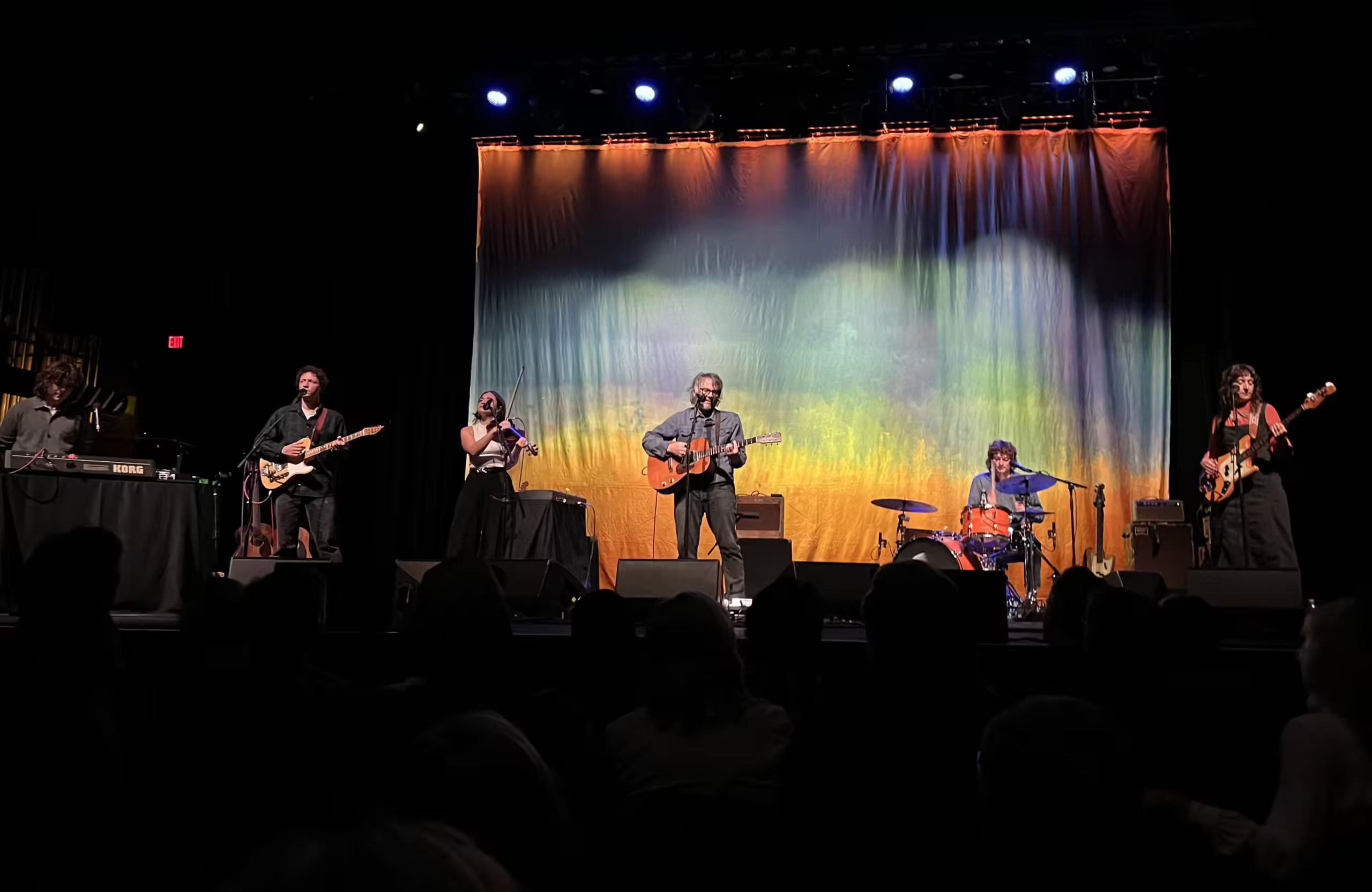
Short beards, knitwear, too-small beanies, and wire-rimmed glasses; on Oct. 26, Jeff Tweedy brought his classically eccentric audience to the Lincoln Theatre. The room itself felt like a relic from another decade: red velvet seats, ornate gold trim curling around the balconies, the faint scent of beer and old carpet mingling with the low hum of conversation. It was the kind of place where everyone seemed to already know each other—or at least shared some unspoken memory.
These were people homesick for a home they haven’t had in years, ever so nostalgic. It was clear to us that we were intruding on some sort of forty-year college reunion, cosplaying as attendants of a school we were too young to ever enroll in. The community on display was one of near-sighted crossword enjoyers, academics without much purpose, and family men who convinced their wives they were the one by quoting Wilco lyrics and spinning original pressings of Uncle Tupelo’s “No Depression” on vinyl. Before the show started, audience members could be caught reading critical literature, using their newspapers as spot-savers, and pausing their Ezra Klein podcasts. It’s safe to say everyone was truly hyped to “see the ‘Tweed do it again.”
As the lights dimmed on the 1,225-seat theatre, Sima Cunningham brought angelic calm to the theater with her opening performance, preparing the elders for what was sure to be a life-changing night. Cunningham, known for being one-half of Finom, truly channeled the classic Chicago-style indie rock Tweedy pioneered. A perfect opener, Cunningham magnificently balanced our tears with laughter, moving from a melancholic tale of bereavement in “Your Bones” to “Me Now (I Guess),” a witty post-quarantine self-reflection that had the whole crowd rolling in laughter. Even the most sweater-vested concertgoers let out chuckles, giggling at the songwriter’s self-deprecating analysis of life after COVID-19.
When Tweedy walked on, everyone got loud, but everything felt quieter. Tweedy walked out looking as we have come to know and love him: bedheaded, balding, sporting jeans and a smart shirt. Tweedy came out to a smiling — and seated — crowd of his biggest supporters. As the first bars of “KC Rain (No Wonder)” struck our ears, the vibe in the theater was palpably heavier than before. Warm acoustic guitar fingerpicking cut through the confessional rock poetry, Tweedy’s raspy and gentle croons of “I was born a little sad, I never knew what I had” hanging in the theater’s old-wood acoustics.
To the audience, a Jeff Tweedy show is a reunion with an old friend. Uncle Tupelo was playing in the background as these couples had their first kiss, and Wilco rang through the start of a new millennium. They danced to “My Darling” at their weddings and in their kitchens with toddlers who inherited their Tweedy Vinyl once they were off to college. As products of this “Tweedcycle” ourselves, we watched as memories of graduations, first apartments, births, and past roadtrips flooded back into the minds of the bespectacled audience, who have made their way through life with Tweedy as a companion. Even Jeff Tweedy himself cannot escape the Tweedcycle, joined on stage by both his sons, Sammy and Spencer.
Both Tweedy sons bore a striking resemblance to their father, with wild hair and defined jawlines. Sammy danced wildly behind a Moog Synth, smiling at his father’s jokes, as his synthesizer droned, ambient and moody. “Sammy has a great new project coming up,” Jeff bragged, “Whatever you’re expecting, it’s the opposite.” Spencer is best known for his understated rhythmic drums, always grooving but never showy; he has played with country star Waxahatchee on their past tours and collaborated with Norah Jones and Beck. It was heartwarming to see such a display of familial affection onstage. “Remember Grandpa?” Jeff asks Spencer as the subtle twang of “Forever Never Ends” escapes Tweedy’s cherry red Gibson SG. During the climax of the song, Sammy runs out from behind his synth to belt the final chorus, a gravelly “Forever never ends, I’m always back there again and again and again.”
Filling out the band, opener Sima Cunningham laid down a consistent rhythmic foundation, plucking out basslines from “Twilight Override.” Sima’s younger brother, Liam Kazar, and her Finom partner Macie Stewart also accompany Tweedy on tour, bringing perfectly muted guitar and vibrant violin to the stage. Tweedy, in between songs, remarked on the closeness of the band, “I’ve known everyone up here since they were kids, two of them since birth.” It really is a Tweedy family affair; while Jeff was the obvious star of the show, the rest of the band shone just as bright.
The 30-song three–part album “Twilight Override” consumed nearly the entirety of the setlist with only a few injections from Tweedy’s older solo projects. The album was a true feat of artistry, full of classics-to-be and future deep-cuts. The night was full of wait-I-love-this-one’s and shh-my-song-is-up’s. “Caught Up In the Past” brought feel-good nostalgia to the crowd, as we all embarked on a memory journey to the “Ace Hotel, Los Angeles.” The orchestral howls immediately transitioned into the spoken word poetry of “Parking Lot,” a confessional piece that imagines a different Tweedy. It wasn’t until we neared the end of the show with “Lou Reed Was My Babysitter” that the crowd finally put their excitement into their arthritic joints (Oh, so you can dance). With a smattering of grunts and popping joints, the audience collectively rose from their seats like marionettes and danced to the voice they had been dancing to for thirty years. That night, Tweedy made it clear that this album was not a collection of singles by a once-great rocker, “Twilight Override” is not Uncle Tupelo or Wilco – it’s pure Tweedy: fresh, raw, and exhilaratingly current.
“I like to do one song each night that I don’t do anywhere else on the tour,” Tweedy informed us. The entire audience was now on the edge of their seats, expecting a favorite from Wilco or Uncle Tupelo’s discography; instead, Tweedy’s guitar whistled out the opening chords to “The Ruling Class,” a working-man’s ditty satirizing the erosion of society through a re-resurrected Christ turned to drugs after experiencing what the world has come to through crimes done in his name. “Yeah, he’s back, Jack, smokin’ crack / Find him if you wanna get found.” It was vintage Tweedy—irreverent, biting, unexpected. The perfect song to remind us why we fell in love with the songwriter in the first place.
The crowd left invigorated, twenty-one again. Bringing a sinful cigarette to their now-wrinkled lips, for the first truly chilly DC night, they laughed with newfound old friends. Tweedy, backstage with his family, chosen and blood, prepared himself for night two in DC, hoping the 9:30 crowd would show up and show out as thoroughly as the Lincoln Theatre. The walk back to the U Street Metro Station was filled with stumbling dances and off-key renditions of the night’s setlist.
On the train home, we wondered out loud what we would look like in 40 years, once our youth fades. Will we be lost in the New York Times game-playing crowd? Will we still be able to stand and dance, or should we book our seated tickets now? Maybe we’ll be able to afford merch by then, maybe we’ll be the catalyst to someone younger’s own revelation that coolness is not doomed with age. Jeff Tweedy reminded us that the scene is not so dead. Aging, maybe, but there is a new life in the singer-songwriter’s nasally voice.
Featured Image by Ellery Kaye.