
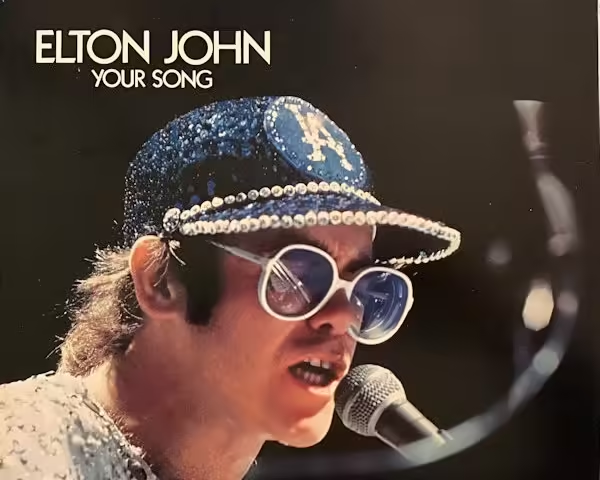
A couple of weeks ago, I was texting a friend of mine over Instagram DMs about an outfit of the day (OOTD) story she had posted. In these daily OOTD posts on her accounts, she includes with it a song that she feels correlates well with the outfit she is wearing. In this particular post, she posted to “Your Song” by Elton John. I slid up on the story and we got to chatting about our mutual love of the song. We both explained how we always imagined it would be played at our weddings, and how it would be the ideal first dance song. We went back and forth about how the themes of love and devotion in the song resonated with us deeply. I explained to her how it meant so much to me, as I believe it is not only a quintessential LGBTQ+ love song, but also how it transcends the common narrowness of many love songs. Bernie Taupin, the lyricist behind the song, chose to omit the use of gendered pronouns in the song, adhering to writing from the second-person perspective using “you” and “yours”. This is believed to be the case because Elton John had not yet come out at the time of the song’s release in late 1970. When he eventually came out later in his career, it led to many speculating that the song was written about a man, and it quickly became a widely popular song amongst the queer community.
As a member of the LGBTQ+ community, I can relate to the second-person perspective as representing the inability to share my love and sexuality with the world as vocally as many of my straight counterparts can. The line “you can tell everybody this is your song” acts as a way of covertly doing that, all the while still being implicit. In a similar vein, the ambiguity of the song makes it universal to any listener. Any person of any identity can find themselves or a connection that they have in these lyrics. Through the use of non-gendered pronouns and the gentle nature of the song, it brings about a certain timelessness and idyllic feeling to the listener. This is encapsulated well in the line repeated at the end of the chorus, “how wonderful life is while you’re in the world,” and again in the fourth verse, “yours are the sweetest eyes I’ve ever seen.” I think the intimateness of the lyrics while not having to rely on being lustful is what makes this song stand out. It is relatable to so many people because it doesn’t put a label on what love has to look like, who it is between, or what capacity it comes in, much like how many mainstream love songs do. Its impact will hopefully be made on listeners in years to come, but for now, I enjoy listening to it and letting its lyrics and message speak to all of the love that surrounds me in my life.