
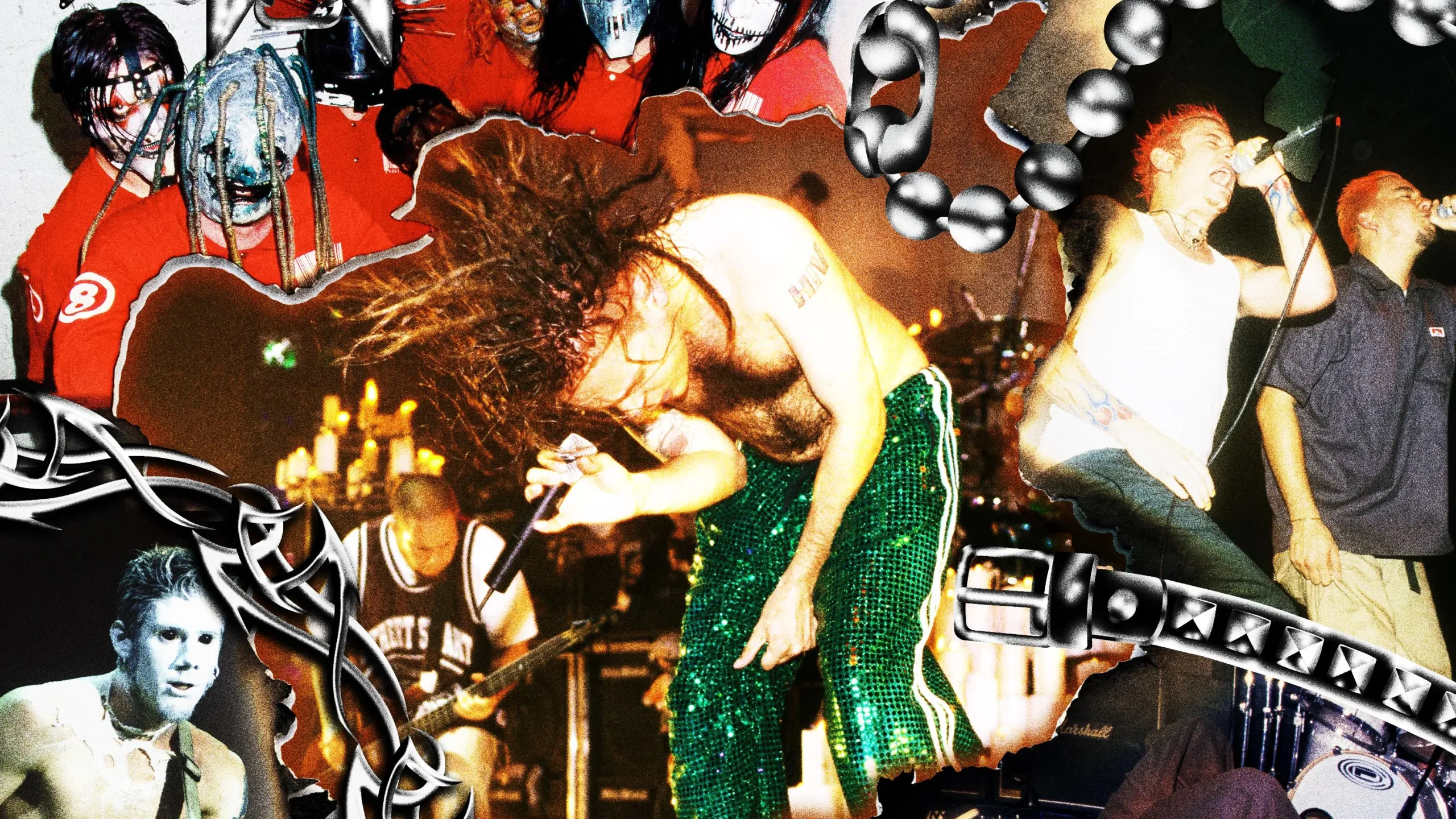
Contextualizing Nu Metal: August 31st of 2025 marked the first encounter I had with moshing. Suicidal Tendencies was opening for Cypress Hill at a venue once local to me; albeit a relatively small venue for the band’s popularity, it was impressively packed with people. Although hardcore band Suicidal Tendencies was merely the opening act, they outperformed the marijuana-centric hip-hop performance that followed them (at least in my heart). My parents sat back on their lawn chairs when the music began; my friend and I, however, ventured into what was once unknown to us. We approached the pit before the moshing began. As soon as the music started, a circle pit opened up underneath the stage. It was a vortex, and it was pulling us in with no intention of ever letting us go. Once caught, it was impossible to escape. From the outside, it was undoubtedly small. Yet when you were in it, it felt anything but. As typical for a first moshing experience, I was horrified with the large quantity of under-showered bodies making aggressive contact with my once-clean skin. It was different from any concert experience I previously had–it was altogether liberating. In the pit, I was no longer an individual. I formed a collective identity with my like-minded music-fanatic peers, and I was free to express my emotions in (almost) any way I pleased. Suicidal Tendencies is a hardcore band; however, the mosh pit is an aspect of punk and hardcore culture that nu metal successfully carried over into the mainstream. And this “mosh pit” feeling–unbridled anger shared with the strangers around you that transcends into a sense of universal belonging–forms the very basis of nu metal.
WHAT IS NU METAL: Nu metal was born in the early-to-mid 1990s. It is a subgenre of alternative metal that grew from prior alt-and-funk-metal developments. It musically emphasizes heavily syncopated rhythms and riff-based instrumentations, so guitar solos are minimal. Vocals are rhythmic and contain strong hip-hop influences (thank you Cypress Hill, for once). Nu metal is one of the few musical genres where artists can freely switch between singing and rapping to screaming and growling in just one song. It is remarkably flexible with a diverse range of expressions open for artists to delve into. Lyrics are explosively aggressive; they are direct, angry, and can be nihilistic. These lyrics cover a wide range of topics, from pain and bullying to abandonment and alienation. However, nu metal is much more than a mere genre. It is an physio-emotional experience that allows individuals to achieve a rare sense of transcendence. For a generation that grew up alone, nu metal served as one of the first places individuals were finally able to get their voices heard.
IMPORTANT DEVELOPMENTS FOR NU METAL: Nu metal was not birthed from nowhere; to exist, a few key developments had to occur first. 1987 saw Anthrax’s release of “I’m the Man”, a rap-metal EP that laid the groundwork for nu metal’s development by breaking musical precedent. Anthrax made metal-rap collisions a possibility for artists; nu metal is known for fusing metal with other genres, which they were only able to explore due to Anthrax. In 1989, Faith No More’s release of “Epic” took a step further. Mike Patton, the band’s lead vocalist, utilized his voice as an instrument and displayed impressive vocal acrobatics. Like stated previously, the vocal range of nu metal artists are impressively wide; Patton set the precedent that it was acceptable, if not encouraged, to show off this range in a piece of music. The last piece of the puzzle lies with groove metal band Pantera. Nu metal borrows much of its metal influence from Pantera; Jonathan Davis, the lead singer of Korn, says there would be no Korn without them.
1993–the “it” year for nu metal. All existential requirements had been fulfilled, and it was finally time for its birth. 1993 was the year in which Korn released their demo “Niedermayer’s Mind”, starting a new wave of American heavy metal. Soon after, in 1994, Korn released their self-titled album. The genre quickly spread to Florida (Limp Bizkit), Massachusetts (Staind), and Iowa (Slipknot). In 1996, Ozzfest occurred and served as a breakthrough for a genre still experiencing largely underground popularity. 1997 was the genre’s “banner year”, with many other bands releasing their own debut albums. This was followed by the “golden age”, and Linkin Park’s album Hybrid Theory marked the ultimate peak (for good reason, too).
THE BACKDROP: By the 1990s, the picture-perfect vision of the American Dream had begun to decay. This post-war suburban ideal of the white-picket-fence was near-impossible to maintain with the reality of declining wages, deindustrialization, and governmental deregulation. Whereas the “Golden Age of Capitalism” from the 1940s to 70s saw the father as the sole provider for the family, the oil crisis and stagflation of the 70s disrupted this precedent. The implementation of various neoliberal policies, effectively known as Reaganomics, followed. Social safety nets were cut, wages declined, and both the middle-class mother and the father had to work if they wanted to make ends meet. However, the United States did not have an effective childcare system in place to match the changes unfolding. Many children were left alone at home, resulting in the emergence of emotional emptiness. Further, divorce rates began to rise in the 70s and 80s. Although this gave many individuals the opportunity to finally escape abusive relationships they were once trapped in, it did weaken the former norm of the nuclear family.
THE EMOTIONAL RESULT: At home, feelings of loneliness were rampant among the younger generation. There was a significant psychological impact created by this social structure that forced independence at such a young age. Additionally, stranger-danger discourse kept children trapped indoors–yet another form of isolation. Since parents were often absent due to financial pressures, children began to lack crucial emotional connection. Resentment only grew as children started to feel like outsiders among their own families. The release of Korn’s “Daddy” is indicative of this. Lead singer Jonathan Davis admitted he was abused by his babysitter as a child. When he confided in his parents, he was not believed. “Daddy” is a song about this parental disbelief–a betrayal–and it ends in Davis’ raw emotional breakdown. Music became his form of personal therapy, and it validates listeners who may not have been believed as children too.
THE CHOSEN OUTLET OF EXPRESSION: The manifestation of anger as solely destructive is a detrimental misconception in society. In nu metal, anger is a central theme. However, that anger is expressed in an innocuous manner. The expression of anger via music is a creative process that brings something new and better into our world. The cathartic music also helps to heal the “wounded child” still residing inside adult listeners. Furthermore, the nu metal community is a judgment-free space in which individuals from all walks of life are wanted and should never feel alone. Looking past misunderstandings of aggression, nu metal brings acceptance for all and a like-minded community for those who desperately need it.
Nu metal gives a voice to those who very well otherwise may be voiceless. The genre was borne out of a desire to express grievances with society and release widespread anger healthily and productively.
In the Suicidal Tendencies pit, nobody knew my name or who I was. They didn’t know why I was angry, and they definitely couldn’t care less. Everyone else was focused on releasing their own anger; no judgment was ever imposed. In the pit, the loudest thing you feel is welcome. Now, over 30 years later from the genre’s birth, metal is still feeling the positive ripple effects caused by nu metal.
UP NEXT: a closer look at Nu-metal fashion
Image Source