
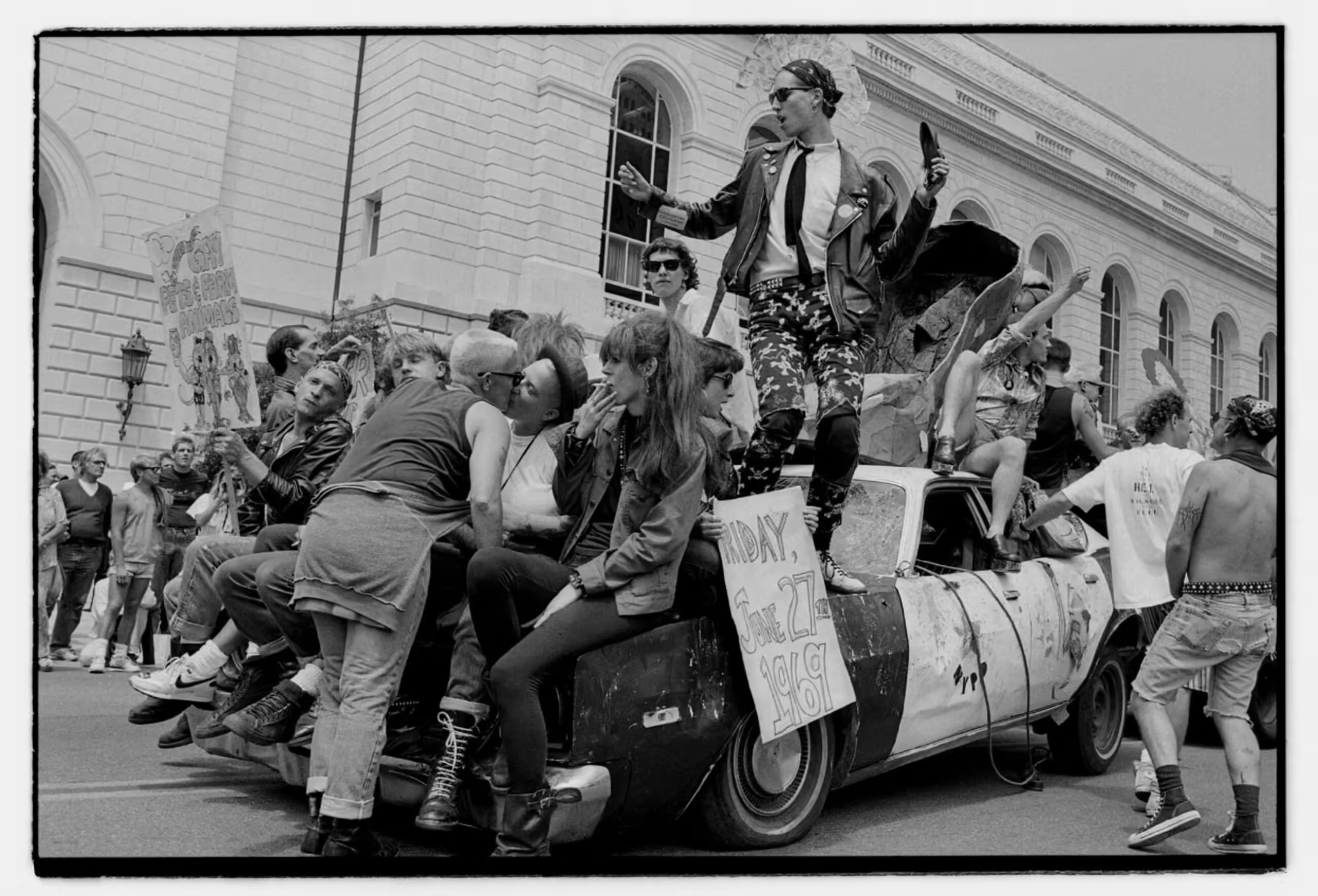
By the mid-1980s, queer life in North America was collapsing. The AIDS epidemic tore through communities at an unprecedented rate, while the Reagan administration refused to respond in an effective manner due to social stigma. At the same time, this stigma overflowed into punk communities, proving hostile to anyone acting outside the expectations of the subculture. Even fellow queer people weren’t all too accepting of queer punks, with many believing the best way to become accepted by mainstream society was to assimilate to their politics and ideals.
Toronto musicians G.B. Jones of Fifth Column and Bruce LaBruce of Zuzu’s Petals reached a self-described breaking point during this time period, in which they shared the same sentiment of feeling accepted neither by their hometown punk scene nor their city’s sanitized, palatable queer community. They founded the zine JDs (Juvenile Delinquents) in 1985, their answer to finding a home at the intersection of both queer and punk.
True to punk history, much of JDs’ content has been lost to time. What survives of the publication shows us it hosted a variety of media, including collages, literature, and even the occasional homosexual pornography. Near the end of its short run, the zine shipped out a mixtape of bands Jones enjoyed, titled “Homocore”. The name started as a joke to describe music that spoke to queer experience, but Jones and LaBruce had effectively created a manifesto for an imaginary scene where queer punks could thrive.
Soon enough after the “death” of JDs, “Homocore” zines began to pop up across North America, each one a signal flare for isolated queer punks looking for community. At first, the music associated with the movement came from punk bands that simply aligned themselves ideologically. But within just a few years of the movement’s momentum, queercore (a more inclusive term) began to form as a genre and subculture, with bands starting to claim themselves as such. Anti-Scrunti Faction, Comrades In Arms, and G.B. Jones’ own Fifth Column are among some of the earliest artists of the genre.
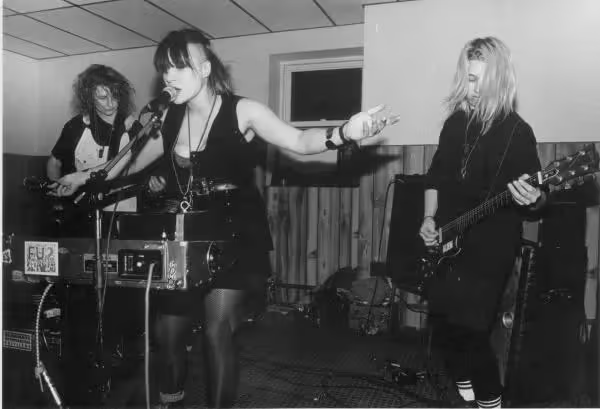
Image of Fifth Column, courtesy of Discogs
Scenes sprang up accompanied by conventions, record labels, and of course, zines, the central aspect of queercore. It is no surprise, then, that the first record label attributed to the genre, began as one. Outpunk Records, founded by Matt Wobensmith, began releasing compilation tapes of the scene’s burgeoning sound. Once word got out about the label, he acquired an elite roster of the genre’s bands, including Tribe 8, Pansy Division, Sister George, God Is My Co-Pilot, and more. Several artists on the label blur the line between queercore and Riot Grrrl (7 Year Bitch, Bikini Kill), sharing the same critiques of machismo and holier-than-thou attitude in punk.
Wobensmith’s column in one of the most prolific punk magazines, “Maximum RocknRoll”, forced conversation about queer oppression in the punk community, rightfully questioning the morals of scenes that liked to imagine themselves as progressive. Though queer punks had succeeded in creating their own spaces, Wobensmith’s contributions pushed beyond that goal to reduce discrimination and produce action.
Zines, labels, and bands had been established around the world by the mid-1990s. Queercore gained even more notoriety when Pansy Division embarked on a tour with Green Day in 1994. Fresh off the explosive success of “Dookie” (no pun intended), Green Day faced backlash from fans and venues for insisting an openly gay band open their shows, and refused to play without them. Nevertheless, the band persisted, exposing the mainstream to the movement. Not even 10 years after queercore was written into existence in the pages of a little Toronto zine, Howard Stern was sharing his love for an entirely gay rock band on national radio.
Queercore was no longer an imagined utopia living only in the minds of hopeful queers across North America. By the end of the 1990s, queercore became an integral subgenre of punk, thanks to the likes of “Homocore” nights, queer punk venues, and festivals sustaining the genre. Zines, of course, maintained their position as the central communicative tool of the culture, with paganist and anarchist deviations allowing for even smaller, nicher subgroups of queer punks to find like-minded individuals.
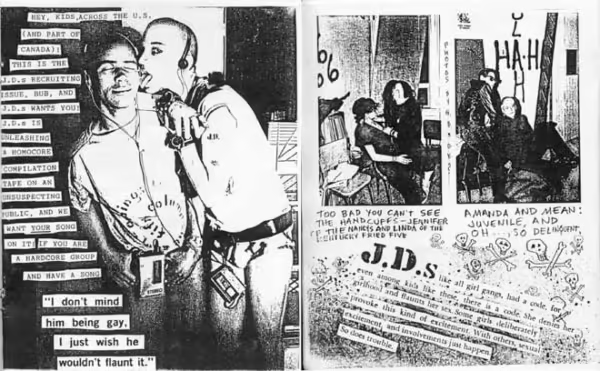
J.D.s #5 (1989)
The 2000s saw queercore manifesting into film, visual art, and performance, producing everything from comedy (“No Skin Off My Ass”) to animation (“Green Pubes”) and spoken word. Festivals continued their work to aid community outreach, offering workshops, productive conversations, and platforms for the community’s art. Feminism also became less adjacent to the culture and more of a central element. Musically, bands of this era like Limp Wrist, The Butchies, Gravy Train!!!!, Hunx and His Punx, pulled from every genre imaginable, from electropop to traditional Jewish music and ‘90s girl groups.
As the internet became a more important aspect of daily life, zines gave way to forums and blogs like QueerPunks. At the same time, queercore began to question its media’s ephemerality, making it more of a point to document what had already been written. Much of its early history had disappeared as an unfortunate effect of a culture opposed to archiving its own material. Some of the first exhaustive documentations of the movement were “Homocore: The Loud and Raucous Rise of Queer Rock” and “The Queer Zine Archive Project.”
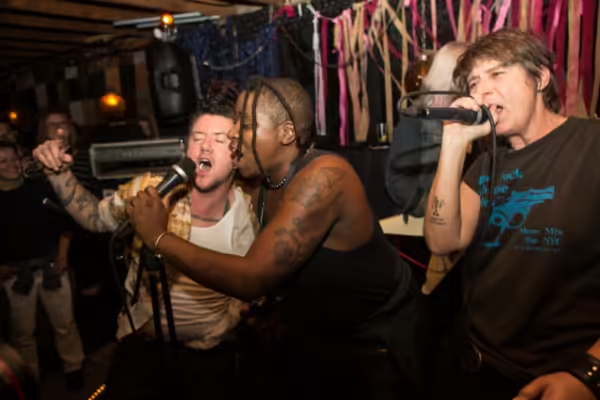
Image courtesy of Patrick Bresnan from OUTsider 2015
Today, trans artists are more visible than ever, with artists like Laura Jane Grace of Against Me! publicly transitioning and writing music that expresses trans experience. Bands like the Muslims confront intersectionality across race and queerness. (Somewhat) Mainstream success isn’t out of the question either, as Dazey and the Scouts re-emerged on TikTok a few years back after several of their songs went viral on the platform.
Zines are also back! Countless TikTok tutorials explain how to make your own zines at home, they’re reclaiming their spots at bookstores around the world (Zine Map can help you identify a Zine Distro near you) and thousands are distributing through snail mail clubs, which feature a collection of writing, stickers, and other goodies alongside zines for subscribers. Substack is also allowing a new generation to engage in intellectual, long-form conversation.
Festivals still contribute to mutual aid, with modern iterations including Liberation Weekend, a two-day festival founded by Ekko Astral (fun fact: their guitarist is an AU alum), raising funds to fight anti-trans legislation. With emboldened homophobia and anti-trans legislation being perpetuated, the need for queercore is still so important. To uplift our communities, to fight for what’s right, and to remember what’s just as important: queer joy. Keeping that in mind, as long as we’re here, queercore will insist.