
There’s a little band popping off right now called Geese. I’m quite a fan of them, if you couldn’t tell. If you couldn’t, I recommend going through the ‘Blog’ section of this website—you’ll see I reference them every once in a while. Or 24/7, that’s probably more truthful.
“Getting Killed” is an album that, to me, is completely original and flourishes within its imperfections. It is a breath of fresh air in an indie rock sphere that is a Merry-Go-Round of leftovers of acts like The Strokes and LCD Soundsystem. That’s not to disregard the current quality of indie rock, but rather a question of how strong the music’s overall originality is.
With now infamously intense fandom and torrential critical praise has come a fair share of criticism—“psyop,” some call them, others regard them as “gospel music for white people who don’t believe in God.” I suppose if this were true, that Friday in November was a holy day, The Anthem was the church, and some of the greasiest, smelliest people in all of the DMV became believers.
_______________________________________________________________________________________________________________________________________________________
Arriving at the Tenleytown-AU Metro stop at a bright-and-early 2 p.m. on November 13th, we hopped onto the escalator and descended miles into the D.C. underground, catching the Red Line to Gallery Place, then the southbound Yellow Line to L’Enfant Plaza. We were ready to spend the coldest fall afternoon thus far huddled on the wharf’s wooden benches for hours and hours. And we did.
From 2:45 to 6:45, we did all we could to amuse ourselves. We scrolled Instagram reels in typical Gen-Z fashion, ate Shake Shack, played HeadsUp, and most amusingly, played a Geese-centered game of Charades—until the line began to move.
We made it into the venue as part of the first 50 people in line, and I rushed to the merch booth. Shirts that read “Geese is for lovers,” yellow lighters that said “I saw Geese live,” a D.C. night-two exclusive poster, and well-overpriced sweatshirts paneled the wall. I wanted everything, but I settled for the poster. It looks quite nice on my door, despite the ugly $40 it set me back.
Once I got through the merchandise line, I hurried back to my friends, who had retrieved a spot center-stage, just one person back from the barricade. Now, the hard part—two and a half hours of constant standing, a task my healing sprained ankle—and my orthopedic doctor—was probably not very excited for.
After an hour, the lights went down and the opener, guitarist Gwenifer Raymond, came out and sat herself down in front of a mic. Speechless, she began strumming. In all honesty, it wasn’t my favorite—my ADD doesn’t afford me the attention span to sit through a free-flowing 50-minute guitar set, but I appreciated the art, just not my niche. I will say, I worried for her fingers throughout the set, as she played for so long without a guitar pick. But that’s beside the point.
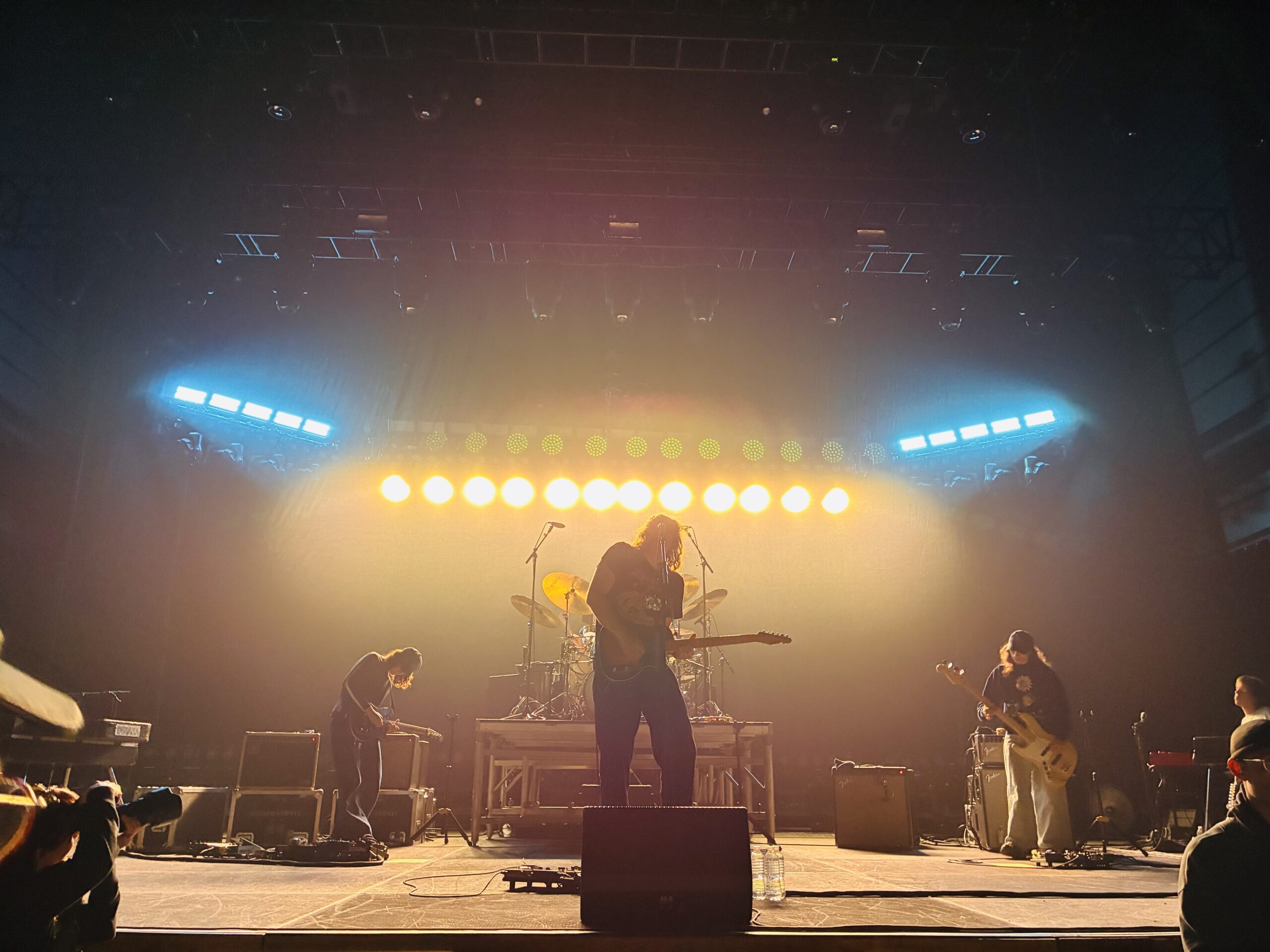
Following her set, another 45 minutes of waiting, entertaining ourselves with stupid photos and corny jokes about the band, while my friend started beef over the Knicks with a man who looked eerily like Anthony Fantano. All up to the final dimming of the lights, a loud roar, and the silhouette of guitarist Emily Green entering stage right alongside drummer Max Bassin.
As the guitar line of “Islands of Men” began, the shadow of Dom DiGesu was revealed alongside his bass, which was practically the same size as him. Then, the loudest cry—Cameron Winter was standing right in front of us. If his figure and the outline of his Lego-figure-esque hair wasn’t enough to identify him, his guttural voice was. And once he began, he wouldn’t stop.
Bathing in the sky-blue lights above the stage, the crowd around me stared up at him the same way a child marvels at Christmas lights—in utter disbelief. We all held position past the end of “Islands of Men,” tracking Cameron with our heads as he sat down at the keys and performed “Cobra” and “Husbands.” Once the trio of songs was over, the madness began.
The energized guitar riff of the title track, “Getting Killed,” electrified the venue, and with it came an immediate surge of people pushing and shoving. This was the concert I had been preparing for.
Bodies were flying above, beside, and below me—people were crowd surfing and being pulled up off the floor by their hoods. If you weren’t getting kicked and punched, you weren’t doing it right. As the song intensified, so did the crowd—feeding off the energy of the band. After the track ended, it went quiet again. Cameron walked back up and mumbled something nobody could possibly understand, but everyone cheered. And we cheered loudly.
“God of the sun, I’m taking you down on the inside!” he cried. Darkness. Front to back, left to right—my body was sucked in, and I had no control of where it was going. A crowdsurfer kicked my camo Geese hat off (don’t worry, we found it), but we kept jumping. When they hit the instrumental, they began their surprise song verse—Fugazi! “Waiting Room!” A D.C. classic. The crowd chorused, “sitting in the waiting room,” and I looked up at the orange and blue lights washing over everyone, basking in the melodies. For the next few songs, everything was a blur highlighted by constant shifts within the crowd and the blur of bodies that rotated around me—the midsection of the setlist was an experience that was all but a memory, except for my struggles to push myself back into the section my friends and I had claimed.
Eventually, I made it to that spot, much sweatier than before, and found my friends. All of us in one piece, the spotlights gleaming off our sweaty foreheads as we let out blank screams in our long-lost voices. The band continued to play, singing their abstract surrealist lyricism, “I was a sailor and now I’m a boat / I was a car and now I’m a road,” as we kept the crowdsurfers overhead afloat.
By now, the show was in its final third, highlighted by the songs that had launched the band into their current rockstar standing. As Cameron played around with a cowbell, he made his way to the keys, prancing over them repetitively, tapping his foot to the beat of the “Getting Killed” closing track, “Long Island City Here I Come.” Then there was the soft, crooning track of “Au Pays du Cocaine,” which felt like a fairytale after the visceral, nightmarish aggression show that far.
It was at that moment that the pulsing drumming began, the shaker of “Taxes” began—a song that had consumed me this year. My most played song of the year.
There is something about “Taxes” that removes me from my current state, especially at that halfway point in which the instrumental speeds up. Hearing it live was otherworldly. As bodies continued to tumble over us, the moment became more intense. People flailed their arms, crying along with Winter, “Doctor! Doctor! Heal yourself!” In every way possible, it was the ethereal moment I had hoped for —a moment in which the band that I had been waiting to see all year was right in front of me and, perhaps due to my own delusions, was singing to me personally. When the song was over, the intense feeling of euphoria waned away. Sweaty, emotional, angsty—any word you could use to describe someone so sweaty and fired up, I was probably feeling it. But alas, one last song, the song everyone had been waiting for. Yes, I’m talking about the “bomb in my car” one.
“Trinidad” is the closer of practically every show the band does. It’s a song that brings all the energy to a climax, regardless of how tired everyone was. The “Trinidad” riff hit us all in the gut. Lights low, limited vision. Just a bunch of teenagers and twenty-somethings scurrying around, pushing and shoving, awaiting the energy we all know. The next six minutes were a thrashing of bodies, noise, and energy – characterized by the screams of the people around me and the shaking of the ground, but just like that, it was over.
As the Anthem’s full capacity poured out onto the wharf, I sat down on that same brown bench I had familiarized myself with hours before the concert. Around me, the smoke of dozens of “I Saw Geese Live” lighter-lit cigarettes flooded over us—a fitting end to the show I had been waiting months for, another benchmark in my fandom for the band.
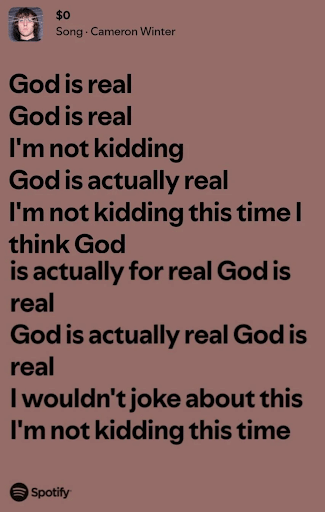
Anyone who came into that show Friday night had become a fan, a believer if you will, and walked out thinking to themself, “God is real, I’m not kidding, God is actually real.” A coming-to-Jesus moment that played a fitting end to the metaphorical “gospel music” they heard prior.